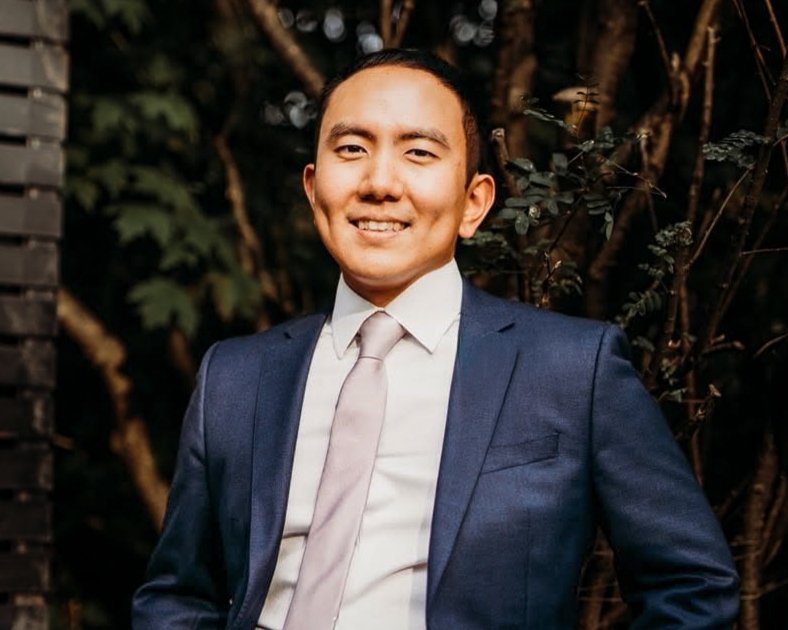
Learning that time is everything
UFred’s online format allowed Sam to continue working from 8 a.m. to 5 p.m. while progressing through his MBA. Thursday and Friday evenings were often reserved for studying at a café. He usually spent another four to five hours on assignments each weekend day.
“During my MBA, I learned that time is everything,” he says. “I simply didn’t have the luxury of sitting around doing nothing. I was constantly balancing assignments, quizzes, studying, a full-time job, and my social life.”
Invitations sometimes had to be declined or rescheduled, but the pressure made him more efficient. He learned to focus, meet deadlines and protect time for his life outside work and school.
Every so often, Sam traded his regular café for a familiar academic setting.
“It sounds funny, but being surrounded by other students helped me feel like I wasn’t the only person studying while everyone else was having fun,” he says of studying at SAIT or on the University of Calgary campus.
A broader view of what he could do
Sam’s classmates included professionals from health care, education, engineering, law, finance and other industries. Their approaches showed him how experience and professional context can influence decisions.
Leadership courses at UFred gave him concepts he could apply immediately. One helped him distinguish between managing work and leading people. Another became especially relevant while his company was navigating an acquisition, allowing him to examine organizational change as it unfolded.
“I have always wanted to become a good leader — someone who can create positive change, see the bigger picture, and build a culture where people genuinely want to work.”
An opportunity to build a new division at an established organization put Sam’s growing business perspective into practice. His responsibilities included developing a quality manual, hiring staff, overseeing financial activities, training supervisors and technicians, supporting branding and business development and managing daily operations.
“I was fascinated by how versatile I could be,” he says.
Moving into a division manager role in his early 30s originally made Sam wonder whether he was too young for the position. But he was offered advice that changed how he saw himself.
“One of the best pieces of advice I received was that if I ever found myself in a meeting where I felt completely comfortable, I was probably not learning enough,” he says.
Sam intentionally sought out places where others had more experience than him. He accepted responsibilities that required him to keep learning. And after three years as a division manager, he moved into a Director of Operations role.
He mentioned that he couldn’t have done this without his friends and mentors — Don, Rocky, Julius, Michael, Amna, Sherry and his mother, Hyunmi. He hopes to do the same for the next generation of leaders who are looking for guidance and support.